How to Best Rearrange Furniture In Your Lofts at Bass Apartment

Moving into a new apartment comes with the kind of energy that makes almost every arrangement idea sound like a good one. The couch goes here, the bed faces that wall, the desk fits in the corner, and then a week later, none of it feels quite right. Rearranging is often the fastest way to make a space feel more livable, but doing it without a plan leads to scratched floors, scuffed walls, and furniture that ends up in roughly the same spot it started. A little preparation before anything moves makes the whole process faster, cleaner, and a lot less frustrating.
The most common rearranging mistake is trusting your eye over a tape measure. A sofa that looks like it fits along a wall often does not once a doorway clearance or a window trim is factored in, and discovering that mid-move is far more aggravating than spending five minutes measuring beforehand. Before shifting anything at the Lofts at Bass, sketch out the room dimensions on paper or use a free floor plan app to map the space accurately, then note where outlets, vents, and light switches sit so the new arrangement does not accidentally block anything useful.
Loft-style apartments reward residents who think about the whole footprint at once rather than one piece at a time. With floor plans at the Lofts at Bass ranging from 826 to 1,736 square feet across one and two-bedroom layouts, residents can work with generous space, but generous space still benefits from a deliberate arrangement. Knowing the dimensions in advance means furniture can land in the right spot on the first try rather than the fourth.
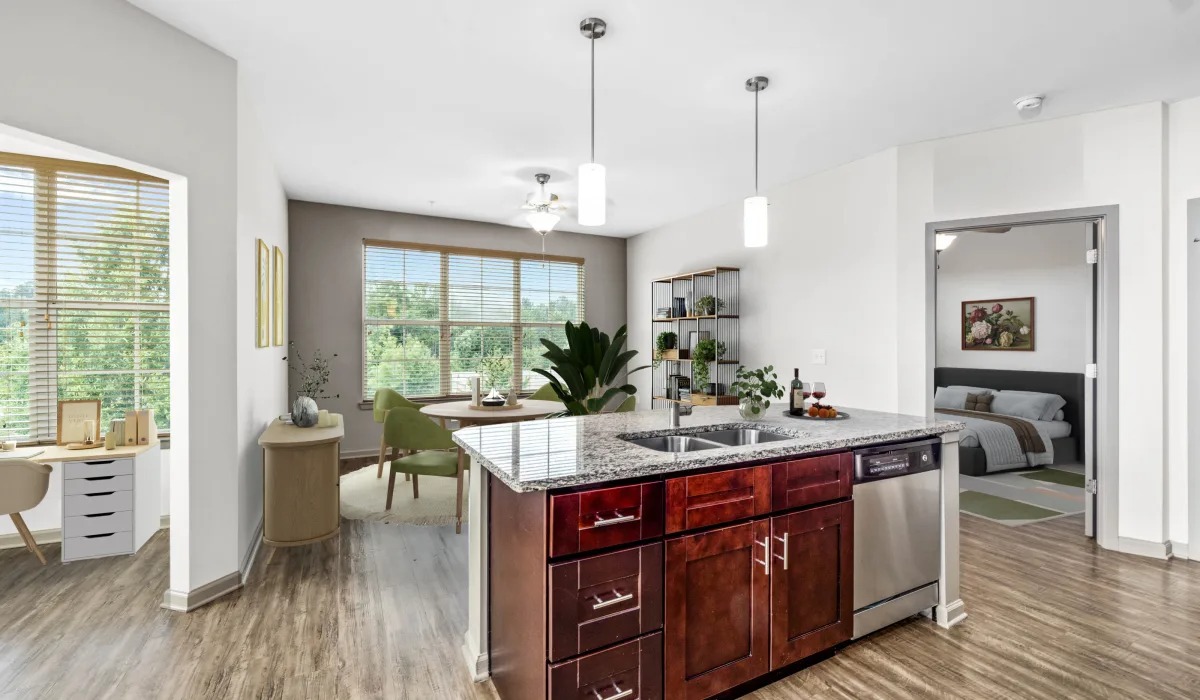
Wood style floors are one of the standout features of a Lofts at Bass apartment, and they are also the first thing that suffers during a careless rearrangement. Felt furniture pads placed under every leg before moving begins cost almost nothing and prevent the kind of deep scratches that are difficult to reverse. For heavier pieces like sofas, bookshelves, and bed frames, furniture sliders are flat plastic or fabric discs that sit under the legs and let residents glide pieces across wood floors with minimal effort and zero drag marks.
Before you lift anything, clear a straight path and pick up grit or small debris that can grind into the finish as furniture shifts. When you need to pivot a piece into place, lift and set it down in short steps instead of twisting or dragging it across the room. If a move feels awkward or off-balance, pause and grab a second set of hands so one rushed push doesn’t leave a permanent scar in the wood.
Open loft layouts offer more freedom than a traditionally compartmentalized apartment, but that freedom can work against residents who treat every square foot as something to furnish. The more effective approach is to use furniture arrangement to create distinct zones, such as a living area, a dining area, and a workspace, rather than spreading pieces evenly across the room. A well-placed area rug does more to define a seating zone than almost any other single move, and in a loft with wood floors, a rug also adds warmth and reduces echo in a way that makes the space feel more finished.
Traffic flow deserves just as much thought as placement. Residents should be able to move through each zone without navigating around furniture, which means maintaining clear walkways of at least two to three feet between major pieces. In a loft with an open floor plan, unobstructed pathways also preserve the sense of openness that makes the layout appealing in the first place, because cluttered traffic patterns make even large rooms feel smaller than they are.

Before committing to any new layout, it helps to spend a few minutes noting where natural light enters the space at different times of day and where the eye naturally lands when standing at the front door. Furniture arranged to take advantage of light and sightlines makes an apartment feel more intentional than one arranged purely around convenience. A few useful principles to keep in mind include:
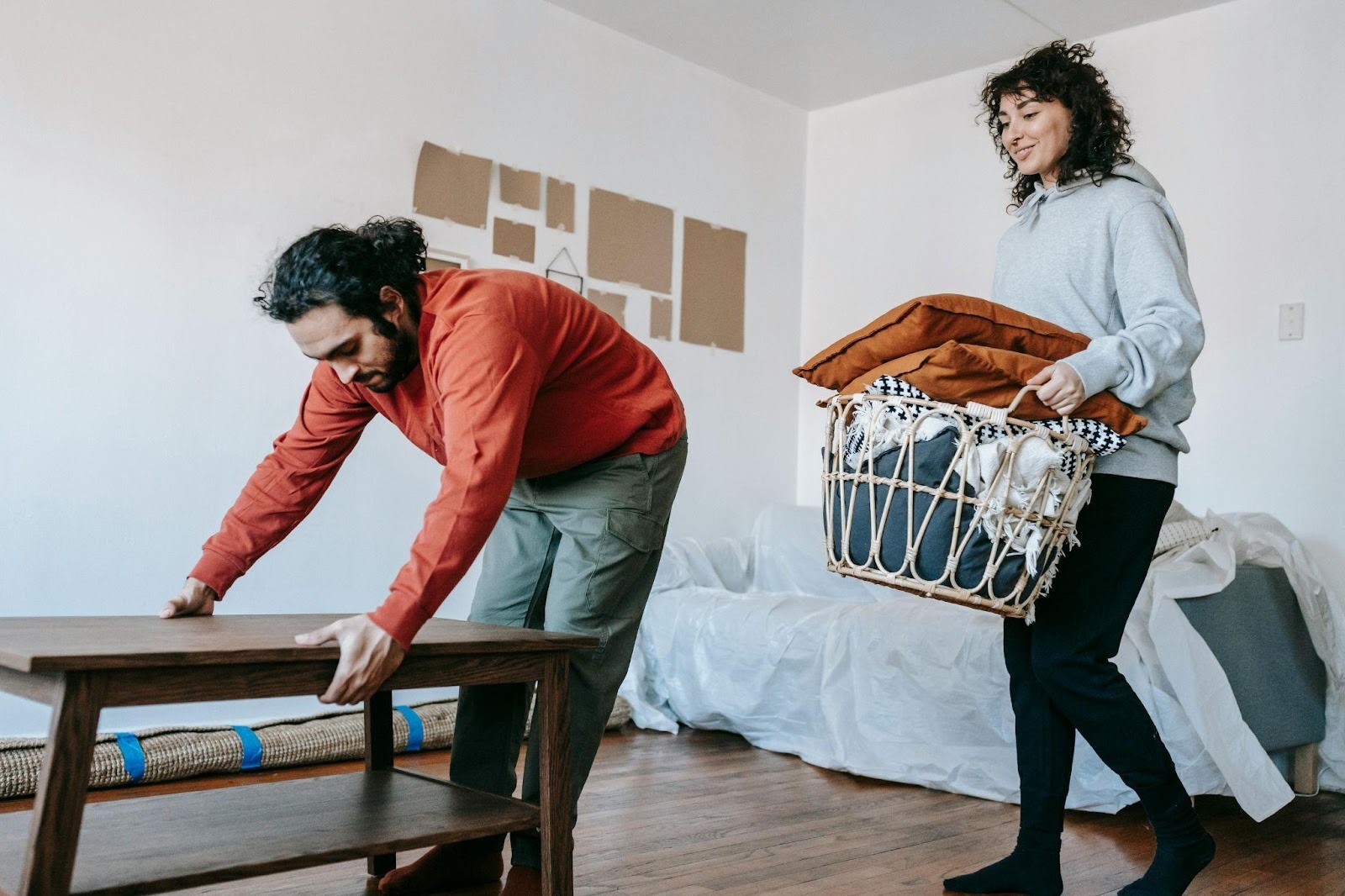
Heavy furniture should always be moved with at least two people and should always lift rather than drag. Even with sliders in place, dragging a fully loaded bookshelf or a heavy dresser across wood floors risks damage at any point where the weight shifts unevenly. For pieces that genuinely cannot be lifted, moving straps distribute weight more evenly across two people and make large furniture far easier to handle on a four-story building like the Lofts at Bass. Wall corners and door frames take damage easily during moves, so wrapping those areas with moving blankets or towels before maneuvering large pieces through doorways prevents the kind of scuffs that are small to create and annoying to repair.
A rearranged apartment that looks great and has intact walls and floors is the goal. Reaching that goal is mostly a matter of slowing down at the right moments and giving each step the attention it deserves before moving on to the next. Get a feel for the space before committing to any arrangement, protect the floors from the start, and work with the open layout rather than against it. Ready to see the space for yourself? Explore the floor plans at the Lofts at Bass online and schedule a GA apartment tour today to walk the actual spaces and see how the light, the scale, and the open loft design come together in person.
Browse our blog for fresh ideas, helpful tips, and the latest posts.




.png)